
Understand ICL Eye Surgery: A Clear Option for High Power & Thin Cornea Patients
ICL (Implantable Collamer Lens) is a reversible, tissue-preserving vision correction option designed for people who either cannot undergo LASIK or are looking for more clarity and comfort.
Free Consultation & ICL Assessment
Get a free expert evaluation of your ICL suitability
Your information is confidential and used only for educational guidance.
Why Some Patients Look Beyond LASIK
ICL may be considered in situations where LASIK is not ideal or when patients are seeking alternative vision correction options.
Very high power
e.g., -3D to -30D
Thin corneas
where LASIK might be unsafe
Contact lens issues
Dryness or irritation
Reversible option
Want a removable correction
LASIK not suitable
Advised earlier by specialists
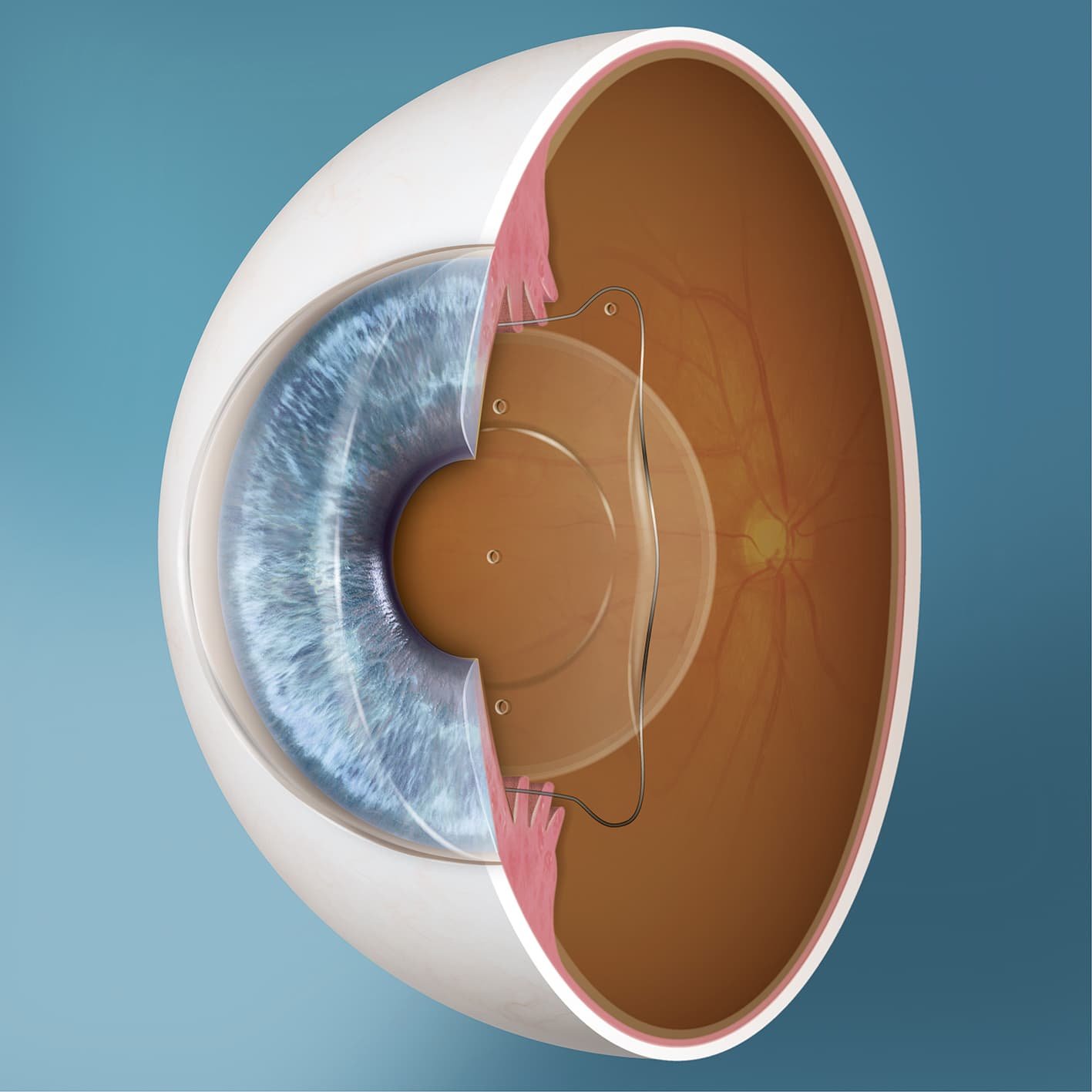
What Is an Implantable Collamer Lens (ICL)?
A simple, visual explanation of how ICL works
It is a soft, flexible, biocompatible lens
Placed inside the eye, behind the iris
Works like a permanent contact lens that you don't feel or see
Does not remove or reshape cornea
Can be removed or replaced later
Only a full eye evaluation by a refractive specialist can confirm suitability.
Side-view diagram showing ICL lens placement
Why Some Patients Prefer ICL Over LASIK
A comparison of key differences between ICL and LASIK procedures
ICL
No corneal tissue removal
LASIK
Permanently reshapes cornea
ICL
Better for thin corneas & high power
LASIK
Limited by corneal thickness
ICL
Reduced dry eye risk
LASIK
May cause dry eyes
ICL
Reversible if needed
LASIK
Permanent, not reversible
ICL
Stable optical quality for night driving
LASIK
May affect contrast sensitivity
Note: ICL and LASIK serve different patient needs. Final suitability must always be confirmed by a refractive specialist.
Compare Common ICL Lens Choices
Different lens options available, each with unique characteristics
| Lens Type | Key Feature | Vision Quality | Recovery | Typical Cost (Per Eye) |
|---|---|---|---|---|
| IPCL | Up to −30D power correction, customized sizing | Excellent | Next Day | ₹50,000 |
| IPCL Premium | Higher contrast clarity & night vision stability | Excellent | Next Day | ₹75,000 |
| BioTech | Enhanced clarity with value pricing | High | Next Day | ₹55,000 |
| STAAR EVO ICL | FDA-approved global lens with superior optical performance | Excellent | Next Day | ₹80,000 |
Neutral note: We do not promote or recommend any specific brand. Lens choice depends on medical assessment.
How the ICL Process Works
A step-by-step journey through the ICL procedure
Eye Scan & Biometry
Comprehensive eye measurements and analysis
Lens Selection & Sizing
Customized lens chosen based on your measurements
20–30 minute procedure
Minimally invasive surgery
Same-day discharge
Go home shortly after procedure
Next-day clarity
Most patients experience improved vision
Follow-up schedule
Day 1 / Week 1 / Month 1 checkups
Cashless Medical Facility – Insurance & TPA Support
Many partner hospitals offer cashless treatment options through major insurance providers and TPAs, subject to policy eligibility and insurer approval.
Reduced upfront payment burden
Minimize out-of-pocket expenses with cashless facility
Transparent documentation support
Clear paperwork and claim assistance throughout
Insurance coordination assistance
Help with TPA and insurer communications
Faster admission & discharge
Streamlined process for quicker treatment
Disclaimer: Insurance coverage varies by policy and insurer approval. Patients are advised to verify their coverage with their respective insurance providers.
Risks & Limitations
An honest discussion of what to be aware of
Temporary glare/halos early on
Variations in night vision initially
Lens sizing and pressure monitoring required
Rare complications (as with any intraocular procedure)
Long-term follow-up recommended
Understanding risks helps you make an informed and confident choice.
Frequently Asked Questions
Common questions about ICL surgery answered
Take the ICL Suitability Quiz
Answer a few quick questions to understand if ICL might be a suitable option for you. This quiz is for educational purposes only and does not replace professional medical advice.
Want Clear Guidance Before Making a Decision?
Our counselors help patients understand eye measurements, safety considerations, and lens choices.
This is not a sales call and not linked to any hospital incentives
Free consultation with no obligation to proceed